Showing posts with label treatment. Show all posts

Tuesday, August 24, 2010

Change in UK regulations may reduce infertility tourism

One factor that can affect any aspect of medical travel and medical tourism is that the market sector can be a victim of its own success. Constantine Constantinides has highlighted this previously in his IMTJ article “Medical Tourism and the West's Revenge”, arguing that in effect the success of medical travel is self limiting.

How can this success be self limiting?

Where overseas treatment becomes an attractive option for patients, domestic providers and governments may react to this trend by becoming more competitive (e.g. by reducing prices for local treatment) or by removing the causes and drivers for medical travel (e.g. by changing local regualtion of a treatment). Thus, the more patients travel abroad for treatment, the greater will be the reaction within the domestic market and a “balance of trade” will be reached.

An excellent example of this phenomenon is this week’s announcement by the Human Fertilisation and Embryology Authority (HFEA) that it intends to conduct a consultation over changes to the rules governing egg and sperm donation in the UK. There has been a significant shortage of egg and sperm donors in the UK due to the restrictions on the payments that can be made to donors. The £250 maximum "compensation" payment for both men and women donors has meant that demand for donor eggs and sperm has far exceeded supply. Waiting lists can be as long as two to three years for those patients eligible for NHS treatment.

The removal of donor anonymity has also been a contributing factor to the reluctance of donors to come forward. According to the most recent HFEA statistics (2008), only 1,184 women donated eggs and there were only 396 new sperm donors in 2008. Around 2,000 babies a year are born in the UK using donated eggs, sperm or embryos. As a result, we have seen an increasing number of UK couples seeking infertility treatment abroad; it has been one of the fastest growing areas of medical tourism. (For the background see “New research paper provides insight into infertility tourism”). The response from the HFEA to the increasing number of infertile couples going abroad is therefore to consider how to reduce this ...... by increasing the payments and incentives to egg and sperm donors, AND thus increasing the supply of eggs and sperm. Payments may increase to £1,000 plus.

It’s unlikely that the changes will have any immediate effect on the market sector. No decisions will be made until the end of the HFEA public consultation next year. The three-month public consultation will not start until January 2011 and the HFEA is expected to be subsumed into the UK’s Care Quality Commission as a result of the UK public expenditure cuts. But there’s a clear warning here for those involved in medical tourism businesses and the medical travel sector. Don’t put all of your eggs in one basket..... Or more seriously, be aware that any segment of the medical tourism market may be limited by its own success when domestic providers and governments seek to reverse the trend.

Thursday, April 29, 2010

Wales....... the latest medical tourism destination for US patients?

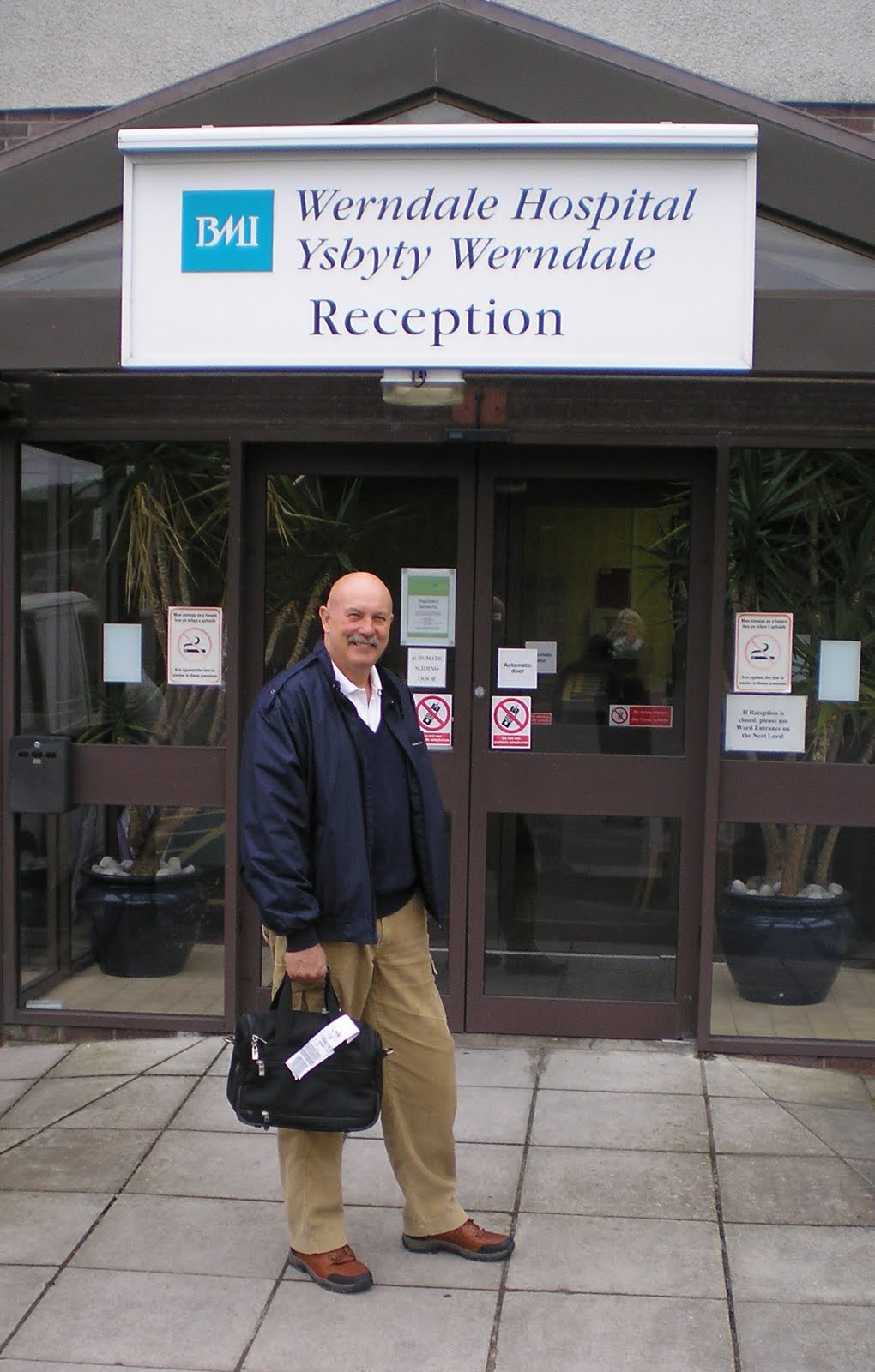
A recent news story on CNN attracted my interest when it featured a US patient who travelled to Wales (in the United Kingdom) for sinus surgery to save money. It was headlined “'I can't afford surgery in the U.S.,' says bargain shopper”. It’s an interesting story which shows how the media can sometimes put a slant on a story to create news, but it does highlight some real opportunities for medical tourism providers.

The story (view the CNN video) tells us about Godfrey Davies, an American, who needed sinus surgery. It tells how he “set out on a mission to find an affordable surgeon”, and was appalled at the costs that he was going to incur in the USA. The story was picked up by a multitude of other web sites who took it at face value.

If you view the video, you get one impression. If you dig a little deeper, you actually get to understand the full story and where this patient fits within the medical tourism marketplace.

As a Brit, I found it a bit odd when I viewed the video. My first impression? Here’s a story about an American guy travelling all the way to Wales for surgery....... Why would he do this? And why Wales? But then I dug deeper. It was in fact a story about someone who started life as a “Welsh bloke”, became an “American guy” and went home for an operation. There’s a clue in his name (Davies...it’s a Welsh surname) and in his slightly odd accent (It’s a Welsh accent). Godfrey comes from Wales. It is where his family lives. He’s a UK and a US passport holder. He married an American and became a US citizen in 2002. He doesn't have health insurance in the US because he believes that the quoted premium of $1,000 per month is too much. He says that "with the deductible and co-pay, I would have had to pay more in over three and a half months than coming home to Wales."
So, what can medical tourism businesses learn from this story?
Firstly, don’t take news stories at face value. There’s sometimes an underlying logic to a news story which the media doesn’t always fully expose. It may make the news less newsworthy. In this case, it’s understandable why a Welshman (as opposed to an American) might choose Wales as a medical tourism destination.

Secondly, it highlights one of the key factors in why people select medical tourism destinations. Godfrey Davies chose Wales because it is an excellent cultural match, there is no language problem for him, and he feels 100% safe there. And it’s cheap!

Godfrey went to the BMI Werndale Hospital in Bancyfelin, Carmarthenshire. It is part of BMI Healthcare, Britain's leading provider of independent healthcare with nearly seventy hospitals and clinics nationwide. To give you another example, I myself had a total knee replacement at one of BMI Healthcare’s hospitals near London, The BMI Clementine Churchill Hospital. How much would it cost for a knee replacement in an American hospital? $50,000. How much did it cost me in the UK? £10,000 all in ($15,000). The UK price is cheaper than Korea ($17,800), and not far off the prices that Americans pay in countries such as Thailand ($12,000) and Singapore ($10,800). Given the cultural and language match, and the lower travel cost, if you were an American which destination would you choose?


Thirdly, it’s a great example of the kind of American medical tourists that some medical tourism businesses should be targeting..... people from their own country. Thus, the biggest and most realistic opportunity in the USA for Korea based medical tourism providers is most likely to be Korean Americans. Target the easy win, if you want to succeed.

Fourthly, it supports the argument that the UK might actually be an attractive medical tourism destination for US patients. Despite the different accent, there’s no language barrier! There’s a public healthcare system that delivers excellent outcomes. And there’s a private hospital system that already provides treatment for patients from all over the world who travel to the UK to access healthcare quality and expertise. And...... as Godfrey Davies has demonstrated, you can save an awful lot of money over UK prices.

How much does private treatment cost in the UK?
In addition to Treatment Abroad, we also run various UK health information sites. One of these is Private Healthcare UK. It will tell you all you need to know about private treatment in the UK.

If you want to know what UK private treatment costs go to Private hospital treatment - What does it cost? and select an operation.

And if you’re an American (or a Welshman) and you want to follow in Godfrey Davies' footsteps, you can get a quote for UK surgery by completing the enquiry form for UK private hospital treatment.

Thursday, November 13, 2008

Medical tourism: The answer to the global healthcare problem?

A recent article from McKinsey International highlights the magnitude of the challenge that leaders of governments in the developed countries are going to have to deal with sooner rather than later. The article looks at the increasing proportion of a country's wealth that is going to be dedicated to the health of its citizens in future years.

In Europe currently around 9% of GDP is spent on healthcare; in the USA, it's higher, nearer 16% of GDP. For the last fifty years, the increase in health care spending in OECD countries has been 2% above the GDP...... which means that healthcare is taking an increasing proportion of the national wealth. But what happens if this continues? McKinsey says that "if current trends persist to 2050, most OECD countries will spend a fifth of GDP on healthcare. By 2080, Switzerland and the United States will devote more than half of GDP to it, and by 2100 most other OECD countries will reach this level of spending."

Those are pretty astonishing statistics! There's a decent analysis in the article, outlining the supply and demand factors that drive this growth, and offering some arguments as to why this trend will not or cannot continue at this rate. However, the harsh reality is that whatever governments do, they and their citizens will be faced by the burden of ever increasing healthcare costs.

And that's the reason why healthcare is becoming global, and medical tourism is being talked about as one of the solutions. More and more, governments will not be able to provide and consumers will not be able to afford the healthcare that they need. The global market in healthcare provision will expand to meet the growing demand from both consumers and governments for low cost treatment overseas. And that's where medical tourism comes in.

Reference: Healthcare costs: A market based view: McKinsey International

Sunday, May 25, 2008

Helping patients make the right choice of medical tourism service

More and more people are using online reviews to make decisions about the products and service that they buy. Consumers worldwide want to hear from “people like me” before they make a decision about which product or service to buy. TripAdvisor has become the first place that many people visit when they are planning a holiday or booking a hotel.

So, would medical tourists benefit from hearing about the experiences of other people who have travelled abroad for treatment? Undoubtedly, Yes!.

The web is now the first place that people look to research hospitals and clinics online before they decide where to go. Choosing a doctor, operation, or hospital, is a big decision, and the more opinions a patient can gather, the more secure they feel with their ultimate choice.

The philosophy of our online business is "helping patients to make the right choice". That's why we've just launched Treatment Abroad Ratings and Reviews to provide patients with the “word of mouth” that will help them to make the right choice of medical tourism service, hospital or clinic. We know from other areas of industry that:
  • 63% of consumers are more likely to purchase from a supplier, if it has ratings and reviews.
  • 77% of online shoppers use reviews and ratings when purchasing.
  • 82% of those who read reviews say that their purchasing decisions are directly influenced by those reviews.

But how much trust can people put in reviews of such services? A medical tourism agency, hospital or clinic, doctor or dentist may be tempted to either:

  • Create a fake review to promote their own service.
  • Create a fake review to damage a competitor’s reputation.

We have chosen BazaarVoice as the partner for our Ratings and Reviews system because of their ability to identify fake reviews through the algorithms they run on review submissions, the tracking of IP addresses of reviewers, the validation of email addresses, and BazaarVoice’s experience of moderating thousands of reviews for major clients every month.

We have also warned clients and healthcare providers that any attempt to bias our reviews service will result in immediate removal of all review content.

We'll see how Treatment Abroad Ratings and Reviews develops over the coming months. But we're sure it will help potential medical tourists to differentiate between the good and bad in terms of medical tourism service providers.

Thursday, January 10, 2008

High UK dental costs driving patients abroad

A new study has been published which compares the cost of providing dental treatment in nine European countries. The UK has the highest costs of dental treatment. (Note: the study compared the cost of providing dental treatment, not the prices that are charged to patients).

According to Siok Swan Tan of Erasmus University Rotterdam, the lead author of the study, differences in dentists' are the most important reason for the variation in costs. "They account for 70 per cent of total costs in England, and range from €0.09 per minute in Hungary to €2.88 a minute in England."

As a result prices for both NHS and private dental treatment in the UK are much higher than in other European countries. It's the main driver for the growth of dental tourism with Hungary the leading destination for UK patients.

The research is part of a wider European Commission study that compares the cost of medical procedure; the study was published in the journal Health Economics.

You can read a full report on the study on the Independent newspaper site. The story made front page news in the UK today.